Sessions are one-on-one with a licensed physical therapist, not an aide or technician. Your therapist will explain what’s happening in plain language, set realistic recovery goals, and give you a home program that keeps progress happening between visits. Whether your symptoms started yesterday or have been bothering you for years, a structured PT program can make a meaningful difference.
Miami Physical Therapist – Physical Therapy Services


- About Us
- Why Choose Us?
- Services
- Español
- Shop
- Areas Served
- Miami
- Alameda
- Allapattah
- Brickell
- Coconut Grove
- Coral Gables
- Coral Terrace
- Coral Way
- Design District
- Doral
- Downtown Miami
- Edgewater
- El Portal
- Flagami
- Fontainebleau
- Granada
- Grapeland Heights
- Hialeah
- Hialeah Gardens
- Key Biscayne
- Little Havana
- Medley
- Miami Lakes
- Miami Springs
- Midtown
- Opa-locka
- Palmetto Bay
- Pinecrest
- South Miami
- Sweetwater
- The Roads
- Town Park Estates
- Tamiami
- University Park
- Upper Eastside
- Virginia Gardens
- West Flagler
- West Miami
- Westchester
- Wynwood
- Miami Airport (MIA)
- FIU
- Resources
- Contact Us
Conditions
Physical Therapy for Shoulder Labrum Tear / SLAP Tear in Miami
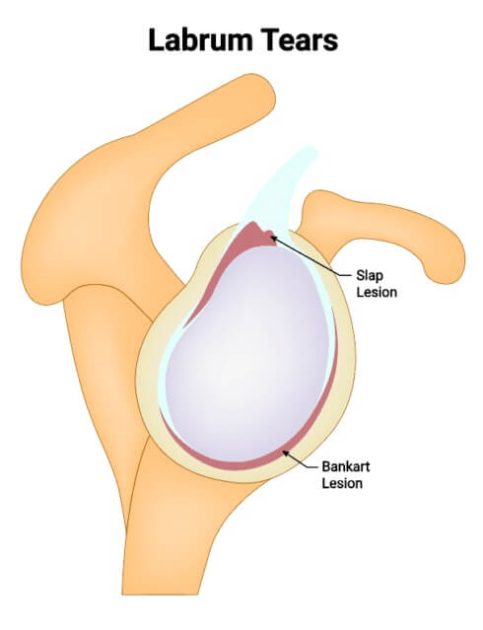
The labrum is a ring of cartilage that deepens the shoulder socket and helps keep the joint stable, and a SLAP tear (superior labrum, anterior to posterior) is a specific injury to the portion where the biceps tendon attaches. These tears can result from a fall, repetitive overhead throwing, or a lifting injury, and they often cause deep, catching or clicking pain that is hard to pinpoint.
Clinics commonly treat SLAP tears and other labral tears managed conservatively, post-surgical labral repair rehabilitation, shoulder instability contributing to labral stress, rotator cuff and scapular weakness that often accompanies labral injuries, and the gradual return to overhead sport or lifting.
Some patients are managed conservatively when the tear is stable and symptoms are manageable; others begin physical therapy following a surgical repair, guided by their surgeon’s protocol. For all of our services, click here.
Hands-On Physical Therapy in Miami
Common Causes and Symptoms
- Deep shoulder pain with a catching or clicking sensation
- Pain with overhead throwing, lifting, or reaching activities
- A feeling of shoulder instability or looseness
- A specific injury such as a fall onto an outstretched arm
- Weakness or stiffness following surgical labral repair
Our Treatment Approach
The primary driver of recovery is progressive strengthening of the rotator cuff and scapular stabilizers to improve shoulder stability, following any surgical protocol precisely when a repair has been performed.
Manual therapy techniques such as joint mobilization and soft tissue work support this process by restoring motion and reducing stiffness, but they are not the main treatment, and progression is coordinated with the patient’s surgeon when applicable.
Why Movement-Based Care Works
Avoiding painful overhead motion can reduce labral symptoms in the moment, but it does not rebuild the shoulder stability that protects the labrum during activity. Physical therapy is built around restoring that stability.
So physical therapy is built around retraining the muscles and movement patterns behind the problem, not just easing today’s discomfort. Over a course of care, patients progress through a staged program to rebuild rotator cuff and scapular strength and shoulder stability, whether recovering conservatively or following surgical repair.
Who This Helps
- Overhead throwing athletes such as baseball and softball players
- Patients recovering from surgical labral repair
- Adults who fell onto an outstretched arm
- People with a sensation of shoulder catching, clicking, or looseness
- Weightlifters and athletes with repetitive overhead loading
- Anyone with shoulder instability affecting sport or lifting
Your Physical Therapy Appointment
What to Expect at Your First Visit
- 8390 W Flagler St Ste 203, Miami, FL 33144
- Monday-Thursday : 7AM - 7PM
FAQ
1. Do I Need a Referral to Start Physical Therapy?
Many patients can begin treatment without a physician referral, depending on their insurance plan and condition. We can help verify your eligibility before your first visit.
2.Will my insurance cover physical therapy?
We accept most major insurance plans and can help you understand your coverage, benefits, and any expected out-of-pocket costs before starting care.
3. What Should I Bring to My Appointment?
Please bring your prescription/referral (if applicable), insurance card, and photo ID. Wear comfortable clothing that allows for movement.