Miami Physical Therapist – Physical Therapy Services


- Home
- About Us
- Why Choose Us?
- Services
- Servicios
- Areas Served
- Miami
- Alameda
- Allapattah
- Brickell
- Coconut Grove
- Coral Gables
- Coral Terrace
- Coral Way
- Design District
- Doral
- Downtown Miami
- Edgewater
- El Portal
- Flagami
- Fontainebleau
- Granada
- Grapeland Heights
- Hialeah
- Hialeah Gardens
- Key Biscayne
- Little Havana
- Medley
- Miami Lakes
- Miami Springs
- Midtown
- Opa-locka
- Palmetto Bay
- Pinecrest
- South Miami
- Sweetwater
- The Roads
- Town Park Estates
- University Park
- Upper Eastside
- Virginia Gardens
- West Flagler
- West Miami
- Westchester
- Wynwood
- Patient Resources
- Contact Us
Conditions
Physical Therapy for Spinal Stenosis in Miami
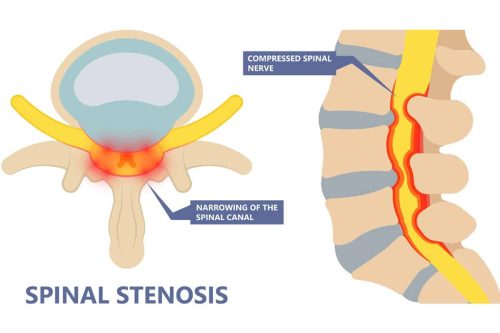
Spinal stenosis is a narrowing of the spinal canal – the bony tunnel that protects the spinal cord and nerve roots. When this narrowing reduces the space available for neural structures, it can cause compression that produces pain, numbness, weakness, and coordination problems.
Stenosis is most commonly caused by age-related degenerative changes including bone spur formation, thickened ligaments, and disc bulging – and is most prevalent after age 50.
The two most common types are lumbar stenosis (narrowing in the lower back) and cervical stenosis (narrowing in the neck), each producing a characteristic set of symptoms.
Physical therapy is a well-established and effective conservative treatment for spinal stenosis.
Hands-On Physical Therapy in Miami
Lumbar vs. Cervical Stenosis
Lumbar stenosis typically produces neurogenic claudication – a distinctive pattern of leg heaviness, cramping, or weakness that comes on with walking or standing and is relieved by sitting or bending forward (which opens the spinal canal). Patients often notice they can walk farther while pushing a grocery cart because the slightly flexed posture increases canal space.
Cervical stenosis produces a very different picture: stiffness and pain in the neck, weakness or clumsiness in the hands, difficulty with fine motor tasks, balance problems, and in more severe cases, symptoms in all four limbs (myelopathy).
Physical Therapy for Spinal Stenosis
PT for stenosis is tailored to the level and severity of the narrowing. For lumbar stenosis, treatment centers on flexion-biased exercises and postures that open the canal and reduce nerve compression – the opposite of the extension-based approach used for disc herniations.
Aquatic therapy is particularly beneficial, as the buoyancy of water reduces spinal loading while allowing significant cardiovascular and strengthening activity.
Manual therapy, stationary cycling, and core stabilization in neutral or slightly flexed positions are also commonly used.
For cervical stenosis, treatment is more conservative and focuses on gentle range of motion, postural correction, and strengthening without provocative positions.
Realistic Goals and Activity Preservation
Physical therapy for spinal stenosis does not eliminate the underlying narrowing, but it can dramatically improve a patient’s functional capacity and quality of life.
Most patients experience meaningful reduction in symptom frequency and severity, improved walking tolerance, and better ability to manage flare-ups independently.
The goal is to keep patients as active as possible for as long as possible – delaying or avoiding the need for surgical decompression in the majority of cases.
Your Physical Therapy Appointment
What to Expect at Your First Visit
A licensed physical therapist will complete a one-on-one evaluation, including a subjective interview and an objective movement exam, to understand the source of your condition. From there, a personalized plan of care is developed, with most patients attending two to three visits per week over a four-to-six-week course of treatment, with progress reassessed along the way.
- 8390 W Flagler St Ste 203, Miami, FL 33144
- Monday-Thursday : 7AM - 7PM
FAQ
1. Do I Need a Referral to Start Physical Therapy?
Many patients can begin treatment without a physician referral, depending on their insurance plan and condition. We can help verify your eligibility before your first visit.
2.Will my insurance cover physical therapy?
We accept most major insurance plans and can help you understand your coverage, benefits, and any expected out-of-pocket costs before starting care.