Miami Physical Therapist – Physical Therapy Services


- About Us
- Why Choose Us?
- Services
- Español
- Shop
- Areas Served
- Miami
- Alameda
- Allapattah
- Brickell
- Coconut Grove
- Coral Gables
- Coral Terrace
- Coral Way
- Design District
- Doral
- Downtown Miami
- Edgewater
- El Portal
- Flagami
- Fontainebleau
- Granada
- Grapeland Heights
- Hialeah
- Hialeah Gardens
- Key Biscayne
- Little Havana
- Medley
- Miami Lakes
- Miami Springs
- Midtown
- Opa-locka
- Palmetto Bay
- Pinecrest
- South Miami
- Sweetwater
- The Roads
- Town Park Estates
- Tamiami
- University Park
- Upper Eastside
- Virginia Gardens
- West Flagler
- West Miami
- Westchester
- Wynwood
- Miami Airport (MIA)
- FIU
- Resources
- Contact Us
Conditions
Sciatica Physical Therapy in Miami, FL
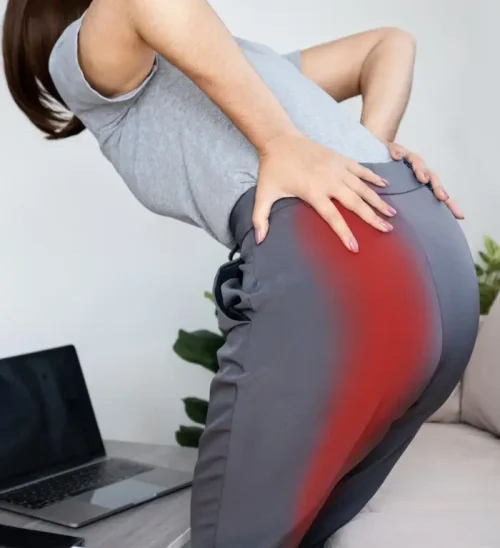
Sciatica describes pain, tingling, numbness, or weakness that radiates from the lower back through the buttock and down one leg, sometimes reaching the calf or foot.
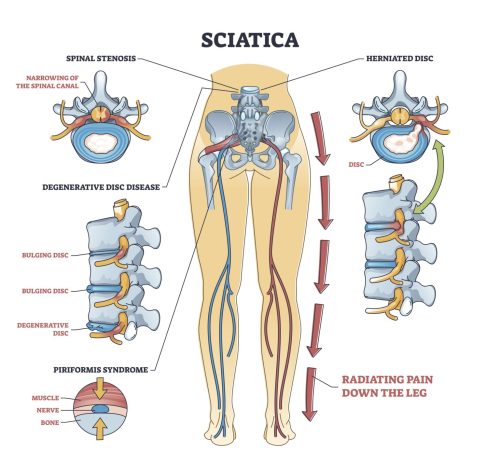
It is caused by irritation or compression of the sciatic nerve – the largest nerve in the body – typically where nerve roots exit the lumbar spine.
The most common underlying causes include a herniated lumbar disc pressing on a nerve root, spinal stenosis narrowing the canal around the nerve, or piriformis syndrome where a tight buttock muscle compresses the sciatic nerve further down its path.
Despite how alarming the symptoms can feel, the vast majority of sciatica cases resolve with conservative care – and physical therapy is the most effective first-line treatment.
What Causes Sciatica?
Sciatica can stem from a number of underlying issues, which is why identifying the true source of your symptoms matters. The most frequent causes include:
- Herniated discs
- Bulging discs
- Lumbar radiculopathy
- Spinal stenosis
- Piriformis syndrome
- Deep gluteal syndrome
- Restricted joint mobility in the lower back
- Tightness in the hip or gluteal muscles
- Poor posture or faulty movement patterns
Sciatica Physical Therapist in Miami
What Sciatica Actually Feels Like
Patients describe the symptoms in different ways depending on which nerve root is affected and how severely. Common presentations include:
- A sharp, electric, or burning pain shooting down one leg
- Numbness or a ‘dead’ feeling in the leg, calf, or foot
- Weakness in the leg – difficulty lifting the foot or feeling unsteady on stairs
- Pain that is worse with sitting, especially on hard surfaces
- Symptoms that improve with walking or changing position
How Physical Therapy Relieves Sciatica
The goal of PT is to reduce the mechanical pressure on the irritated nerve and retrain the surrounding muscles to support the spine without compressing the nerve roots.
We use spinal joint mobilization and nerve mobilization (neural flossing) techniques to calm the inflamed nerve tissue and restore its ability to move freely through surrounding structures.
Manual therapy to the lumbar spine and piriformis muscle is often combined with postural correction to reduce the loading patterns driving the compression.
Directional Preference and McKenzie Approach
Many patients with sciatica respond strongly to a specific direction of movement – most commonly lumbar extension.
This phenomenon, studied extensively through the McKenzie Method, means that certain exercises can quickly centralize pain (bring it back from the leg into the back, where it is easier to treat) and accelerate recovery.
Your therapist will test which direction reduces your symptoms and build your early exercise program around it.
When to Seek Immediate Care
Most sciatica improves significantly within 6–12 weeks with physical therapy.
However, certain symptoms warrant urgent evaluation – including loss of bladder or bowel control, weakness in both legs, or rapidly progressive neurological symptoms.
These may indicate cauda equina syndrome, a medical emergency requiring prompt imaging and surgical consultation.
If you experience any of these, go to an emergency department immediately.
Our Treatment Approach for Sciatica in Miami
- Manual therapy, including joint mobilization, soft tissue mobilization, and trigger point release, to improve mobility and reduce stiffness in the lower back, hips, and piriformis
- Muscle energy techniques to address spinal and sacroiliac joint restrictions that may be contributing to nerve irritation
- Nerve gliding exercises to improve sciatic nerve mobility and reduce sensitivity
- Directional preference exercises, guided by the McKenzie approach, to centralize leg pain and speed up early recovery
- Targeted therapeutic exercise to build core, hip, and gluteal strength, stability, and movement control
- Postural correction and movement retraining to reduce the loading patterns that keep the nerve irritated
- A personalized home exercise program to maintain progress between visits and after discharge

Common Back Conditions We Treat
Your Physical Therapy Appointment
What to Expect at Your First Visit
A licensed physical therapist will complete a one-on-one evaluation, including a subjective interview and an objective movement exam, to understand the source of your condition. From there, a personalized plan of care is developed, with most patients attending two to three visits per week over a four-to-six-week course of treatment, with progress reassessed along the way.
- 8390 W Flagler St Ste 203, Miami, FL 33144
- Monday-Thursday : 7AM - 7PM
FAQ
1. Do I Need a Referral to Start Physical Therapy?
Many patients can begin treatment without a physician referral, depending on their insurance plan and condition. We can help verify your eligibility before your first visit.
2.Will my insurance cover physical therapy?
We accept most major insurance plans and can help you understand your coverage, benefits, and any expected out-of-pocket costs before starting care.