Miami Physical Therapist – Physical Therapy Services


- About Us
- Why Choose Us?
- Services
- Español
- Shop
- Areas Served
- Miami
- Alameda
- Allapattah
- Brickell
- Coconut Grove
- Coral Gables
- Coral Terrace
- Coral Way
- Design District
- Doral
- Downtown Miami
- Edgewater
- El Portal
- Flagami
- Fontainebleau
- Granada
- Grapeland Heights
- Hialeah
- Hialeah Gardens
- Key Biscayne
- Little Havana
- Medley
- Miami Lakes
- Miami Springs
- Midtown
- Opa-locka
- Palmetto Bay
- Pinecrest
- South Miami
- Sweetwater
- The Roads
- Town Park Estates
- Tamiami
- University Park
- Upper Eastside
- Virginia Gardens
- West Flagler
- West Miami
- Westchester
- Wynwood
- Miami Airport (MIA)
- FIU
- Resources
- Contact Us
Heel Pain: What’s Causing It and How to Find Relief
By Hermi Jara, PT - Owner, Physical Therapy Services
Heel pain is one of the most common foot pain complaints I see in the clinic – and in the vast majority of cases, it comes down to one condition: plantar fasciitis. In fact, plantar fasciitis is thought to account for roughly 80% of all heel pain, which makes it by far the most likely explanation if your heel hurts. It’s uncomfortable, it’s frustrating, and if it’s ignored long enough, it can start changing the way you stand, move, and go about your day.
Below, I’ll break down what’s actually happening in your foot when heel pain shows up, how to tell the difference between “this will settle down on its own” and “this needs attention,” and what’s worked for my patients over 25+ years of treating this exact condition.
If your pain isn’t limited to the heel, check out our guide to other foot pain conditions.

What Is Plantar Fasciitis, Really?
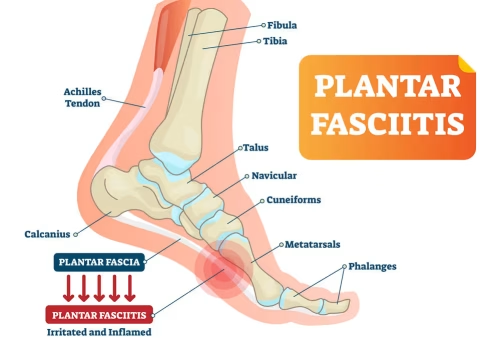
The plantar fascia is a thick band of connective tissue that runs along the bottom, or plantar surface, of your foot, from your heel to your toes. Its job is to support your arch and absorb shock. When that tissue gets overloaded – from repetitive stress, tight calves, extra body weight, or foot mechanics like flat or high arches – the soft tissue fibers of the fascia develop small tears and become inflamed. That’s plantar fasciitis, and it’s the single most frequent cause of heel pain I treat.
This is also why the pain is often worst first thing in the morning: while you sleep, the fascia tightens back up, and when you resume walking, you can feel a sudden elongation of that band as it stretches and pulls on the heel of the affected foot.
Is It Likely Plantar Fasciitis?
Given how common it is, plantar fasciitis should be your first suspicion for heel pain – especially if you notice these three signs together:
- The pain is on the bottom of your heel, not the back (pain at the back of the heel points more toward Achilles tendinitis or a different condition)
- It’s worst with your very first steps in the morning or after sitting for a while, then eases up as you get moving
- It came on gradually, over weeks, rather than from a specific injury, and there’s no significant swelling, redness, or warmth
When all three line up, plantar fasciitis is the most likely cause by a wide margin. Foot pain in general can range anywhere from a mild ache to a sharp, intense pain, but plantar fasciitis specifically has a pretty distinct pattern:
- Sharp, stabbing heel pain – most noticeable with your very first steps in the morning or after sitting for a while
- Pain that eases with movement, then returns – it often calms down once you get moving, only to flare back up after activity or prolonged standing
- Tenderness right at the bottom of the heel, near the heel bone
- Morning stiffness in the heel that takes a few minutes to work out
If your pain doesn’t fit this pattern – if it’s at the back of the heel, involves burning or numbness, or came on suddenly with swelling – it’s worth getting evaluated rather than assuming it’s plantar fasciitis. (More on the other possible causes further down.)
Who’s Most at Risk
I see this most often in adults between 40 and 60, but it’s not limited to that group. Common risk factors include:
- Being on your feet for long stretches at work
- An active or athletic lifestyle, including running, dancing, or other strenuous exercise
- Carrying extra body weight
- Tight calf muscles
- Flat feet or high arches, which put uneven stress on the fascia depending on your individual foot structure
- Ill-fitting shoes or excessive wear in your current pair
Much of this comes down to biomechanics. Heel pain is generally the result of faulty biomechanics – gait abnormalities that place too much stress on the heel bone and the tissues attached to it. As you walk, your heel contacts the ground first, and the weight shifts from the outside of the foot toward the big toe in a normal walking pattern. Excessive inward motion of the foot as it moves through that pattern can disrupt it, adding extra strain on the fascia and the tendons running down into the lower leg.
Because the plantar fascia has limited blood supply, it heals slowly on its own – which is exactly why this condition so often turns into a chronic problem instead of resolving in a week or two.

When to Stop Waiting It Out
Most heel pain responds well to rest and self-care. But I tell my patients to seek medical attention – from a physical therapist, a doctor of podiatric medicine, or one of the board-certified podiatrists in their area – if any of the following show up:
- Pain that hasn’t improved after two weeks of rest and self-care
- Sudden, severe pain, or pain that makes it hard to bear weight
- Swelling, redness, or warmth that doesn’t start improving in two to five days
- Pain that keeps getting worse instead of better
- Any noticeable change in how you’re moving to avoid the pain
That last one matters more than people think. When you start compensating for a sore heel, that changes how you stand and move, and it can create new problems in your knees, hips, or lower back. Addressing heel pain early is almost always easier than fixing the chain reaction it can cause later.
A health care professional will typically start with a physical examination and a review of your symptoms to confirm the root cause before recommending treatment options.
The Usual First Steps for Relief
For mild-to-moderate cases, these conservative treatments go a long way as early treatment:
- Rest, but don’t stop moving entirely – gentle activity supports healing better than complete immobility
- Ice for 15 to 20 minutes at a time to calm inflammation
- Stretch the plantar fascia and calf muscles regularly
- Check your footwear – look for shoes with shock-absorbent soles, rigid shanks, and supportive heel counters, and replace them roughly every 300-500 miles of use
- Orthotics or shoe inserts for extra arch support
- Night splints, which keep the foot flexed overnight to prevent the fascia from tightening back up
- Nonsteroidal anti-inflammatory drugs (NSAIDs) or other over-the-counter medication to manage pain short-term
- Maintaining a healthy weight, which reduces the ongoing load on the fascia
If these conservative treatments aren’t enough, a podiatric physician may recommend oral or injectable anti-inflammatory medication, or taping and strapping to place stressed muscles and tendons in a more physiologically restful state. More advanced treatments – corticosteroid injections, a minimally invasive procedure to remove scar tissue from the fascia, or, rarely, plantar fascia release surgery – are typically considered only after conservative options haven’t worked.
Why Rest Alone Often Isn’t Enough
Here’s what 25+ years of treating this condition has taught me: plantar fasciitis isn’t just inflammation – it’s small tears in the fascia caused by repeated tension and strain. Icing and resting can quiet the pain down temporarily, but if the muscles that support the plantar fascia stay weak, the underlying stress on that tissue never actually goes away. That’s why so many people feel better for a few weeks, go back to their normal routine, and end up right back where they started – without ever getting an effective, lasting treatment.
I struggled with this myself. Plantar fasciitis once got bad enough that I had to stop practicing sports, and for a period, stop working altogether. After years of research, I came to a clear conclusion: strengthening the specific muscles on the bottom of the foot is what allows the plantar fascia to actually heal, rather than just quieting the pain around it. That insight is the entire reason I built J-Flex PFT.
Introducing J-Flex PFT: A Plantar Fasciitis Exercise System I Designed as a PT
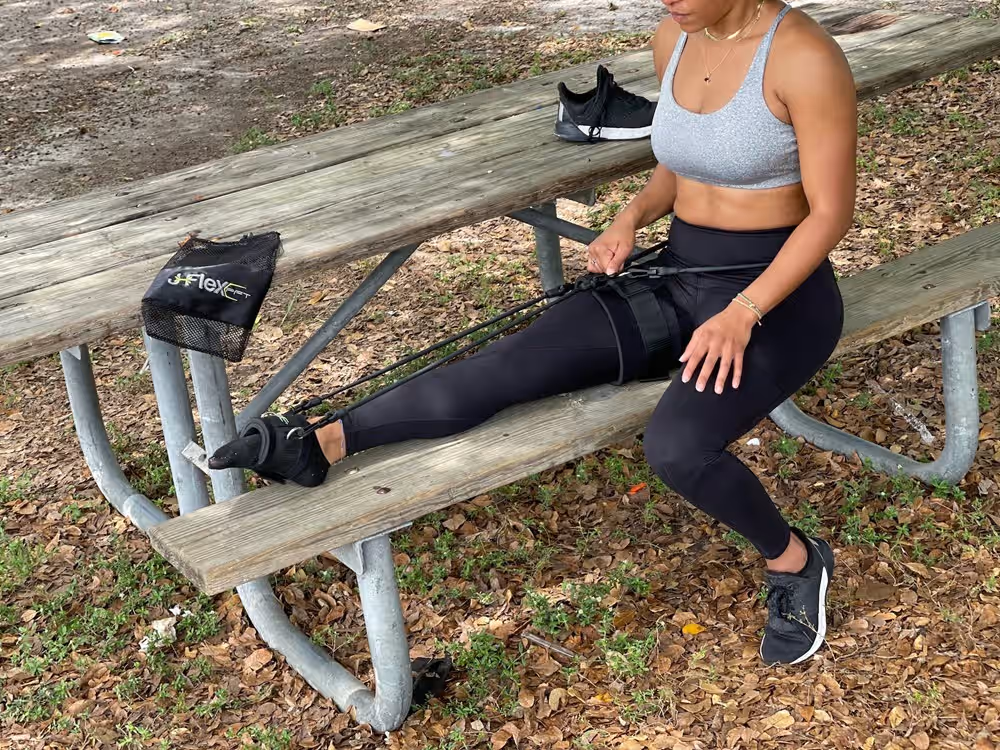
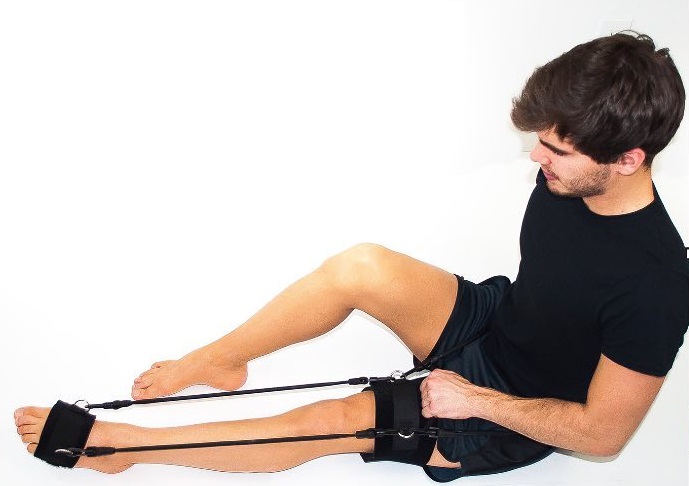
J-Flex PFT is a simple, adjustable therapeutic exercise system I designed specifically to target the muscles on the bottom of the foot that support the plantar fascia. Unlike a passive insole or a generic stretch, it’s a wearable band-and-strap system built to actively strengthen those muscles – so each rep helps close the underlying microtears rather than just masking the pain around them.
What it does:
- Restores strength in the long toe flexors attached to the plantar fascia
- Stretches tight toe extensors and the Achilles tendon
- Restores musculoskeletal balance in the foot
- Targets the root mechanical cause of plantar fasciitis, not just the symptoms
- Works on either foot
- Portable – use it at your desk, at the beach, or while reading

Why It’s a Smarter First Step Than the Alternatives
- surgery – Plantar fascia release carries real cost and risk, and some patients improve on their own regardless of whether surgery is performed. It’s rarely where anyone should start.
- cortisone injections – Injections typically reduce pain in only 20-50% of cases, with relief lasting anywhere from a few days to about 12 weeks, and they carry risks like heel pad atrophy or fascia rupture.
- expensive shoes or custom insoles – These can help with comfort, but they’re a recurring expense that supports the foot from the outside instead of strengthening it from within.
- ongoing therapy sessions – Effective, but often expensive and time-consuming compared to a one-time, at-home tool.
- rolling a ball under your foot – There’s little evidence this passive approach actually helps, and it can sometimes irritate the fascia further. J-Flex PFT’s active strengthening approach is built to do more.
J-Flex PFT is recommended by orthopedic doctors and used by Olympic athletes, and it’s backed by a 30-day money-back guarantee – so you can try it with zero risk.
A quick note: J-Flex PFT is built specifically to treat plantar fasciitis. If your heel pain doesn’t match the pattern described above, or turns out to be one of the other conditions listed below, this isn’t the right tool for it – talk to a specialist about a treatment plan suited to your specific diagnosis.
How the core exercise works:
Point the foot and curl the toes downward, holding for 10 seconds at maximum strength – a simple, isolated movement you can build into a daily routine in just a few minutes.
What Patients Are Saying
“I am so impressed – one of my patients had this pain for months, and after a couple of weeks using J-Flex PFT he is now pain-free.”
Cielo R., Physical Therapist, Stuart, Florida
“I am playing tennis again. Before, I had pain even walking. I feel great now, thanks a lot.”
Elisa, Cali, Colombia
“I’ve tried everything and nothing worked, until I started using J-Flex PFT. It has been a total change in my life.”
Ana M., Atlanta, Georgia

- 25+ Years Treating Plantar Fasciitis & Foot Pain
About the Physical Therapist
Herminsul Jara – known to his patients simply as Hermi – trained in physical therapy at Universidad del Valle in Colombia before building his clinical career in the United States, including years at NovaCare Rehabilitation. In 1999, he founded Physical Therapy Services with a straightforward belief: every patient deserves one-on-one attention.
More than 25 years later, that hasn’t changed. Our focus is on personalized rehabilitation programs tailored to each patient’s specific cause, centered on pain relief, improved mobility, strength restoration, and long-term recovery.

Heel Pain FAQs
Why does my heel hurt more with weight-bearing activity? Standing, walking, and other weight-bearing activity put direct, repeated stress on the plantar fascia. Conditions like plantar fasciitis are often only painful – or most painful – during or right after activity, since that’s when the tissue is under load.
Is it okay to stay active if my heel hurts? Mild, brief discomfort is usually fine to move through. But sharp, worsening pain, or pain lasting more than a couple of weeks, is a sign to scale back high-impact activity and address the underlying cause rather than push through it.
How long does plantar fasciitis take to heal? It varies, but most people see meaningful improvement within a few weeks to a few months with consistent rest, supportive footwear, and – most importantly – targeted strengthening of the muscles supporting the plantar fascia.
How can I prevent heel pain from coming back? Replace worn-out shoes, choose footwear with real arch and heel support, and keep the muscles supporting your arch and plantar fascia strong. Most heel pain returns if the underlying weakness isn’t addressed – not just the flare-up.
When should I see a physical therapist for heel pain? If pain has lasted more than two weeks, keeps coming back, or is changing the way you move, it’s worth getting evaluated rather than guessing at the cause on your own.
What are other possible causes of heel pain?
Plantar fasciitis is by far the most common cause, but there are different health conditions worth knowing about too, since the right treatment depends on an accurate diagnosis:
- Heel spurs / heel spur syndrome – Bone spurs are bony growths that form on the heel bone, often alongside long-standing plantar fasciitis. When there’s no visible bone enlargement but the same symptoms are present, it’s sometimes called heel spur syndrome instead.
- Achilles tendinitis – Inflammation of the heel cord (the tendon connecting your calf to your heel), often aggravated by chronic irritation from unsupportive shoes or a sudden jump in activity.
- Haglund’s deformity – A bony bump (or “pump bump”) and bony enlargement at the back of the heel, often linked to ill-fitting shoes.
- Heel bursitis – Inflammation of the fluid-filled sac cushioning the heel, sometimes following an acute injury or an abnormal gait.
- Nerve-related pain – A neuroma (nerve growth) or other soft-tissue growth, or tarsal tunnel syndrome (similar to carpal tunnel syndrome, but in the ankle), can cause burning or numbness rather than a dull ache.
- Arthritis and gout – Rheumatoid arthritis or gout, which often shows up first in the big toe joint, can also cause heel discomfort.
- Stress fractures and bone bruises – Tiny cracks from overuse injuries (common in the metatarsal bones) or a sharp, sudden bruise from direct impact.
- Sever’s disease – In kids and young athletes, heel pain is often calcaneal apophysitis (Sever’s disease), a growth-plate issue rather than an adult foot condition.
- Related ankle issues – Heel pain is the most common foot and ankle problem overall, but an ankle sprain, ongoing ankle pain, or a foot compensating for a prior ankle injury can also shift stress onto the heel. Complex or recurring cases – occasionally involving ankle surgery – are best handled by a specialist in sports medicine for the foot and ankle.
If you’re unsure which of these fits your symptoms, a physical exam from a podiatric physician is the fastest way to find out – and organizations like the American Orthopaedic Foot and Ankle Society and the American Podiatric Medical Association are good resources if you want to research further.
This article is for informational purposes and isn’t a substitute for a professional evaluation. If you’re dealing with persistent or severe foot pain, schedule an appointment with our clinic or talk with your physician.