Miami Physical Therapist – Physical Therapy Services


- About Us
- Why Choose Us?
- Services
- Español
- Shop
- Areas Served
- Miami
- Alameda
- Allapattah
- Brickell
- Coconut Grove
- Coral Gables
- Coral Terrace
- Coral Way
- Design District
- Doral
- Downtown Miami
- Edgewater
- El Portal
- Flagami
- Fontainebleau
- Granada
- Grapeland Heights
- Hialeah
- Hialeah Gardens
- Key Biscayne
- Little Havana
- Medley
- Miami Lakes
- Miami Springs
- Midtown
- Opa-locka
- Palmetto Bay
- Pinecrest
- South Miami
- Sweetwater
- The Roads
- Town Park Estates
- Tamiami
- University Park
- Upper Eastside
- Virginia Gardens
- West Flagler
- West Miami
- Westchester
- Wynwood
- Miami Airport (MIA)
- FIU
- Resources
- Contact Us
Conditions
Physical Therapy for BPPV (Benign Paroxysmal Positional Vertigo) in Miami
BPPV is one of the most common causes of vertigo, producing brief but intense spinning sensations triggered by specific head movements – rolling over in bed, looking up, or bending down. It occurs when tiny calcium crystals in the inner ear become dislodged and drift into one of the balance canals, sending false signals to the brain about head position. Clinics commonly treat posterior canal BPPV, horizontal canal BPPV, and recurrent or persistent cases that have not resolved with prior treatment. For all of our services, click here.
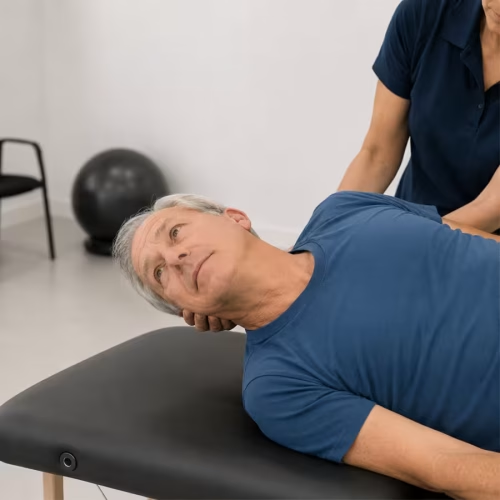
Hands-On Vestibular Physical Therapy in Miami
Our Treatment Approach
BPPV is diagnosed using positional tests such as the Dix-Hallpike maneuver, which identifies which canal and which ear are affected based on the pattern of eye movements it produces.
Once identified, therapists use canalith repositioning techniques – most commonly the Epley or Semont maneuver – to guide the displaced crystals back to where they belong in the inner ear. These maneuvers are highly effective, often resolving symptoms in one to three sessions.
Why Targeted Repositioning Works
Unlike general dizziness, BPPV has a specific mechanical cause, which is why targeted repositioning maneuvers succeed where general balance exercises alone would not.
Rather than masking symptoms with medication, vestibular physical therapy addresses the underlying cause directly. Follow-up visits confirm that the crystals have relocated successfully and screen for any residual balance deficits that may need additional vestibular rehabilitation.
BPPV-Related Conditions We Treat
- Posterior canal BPPV
- Horizontal canal BPPV
- Recurrent or persistent vertigo
- Positional dizziness
- Post-maneuver residual imbalance
- Fall risk related to vertigo episodes
Your Physical Therapy Appointment
What to Expect at Your First Visit
Sessions are one-on-one with a licensed physical therapist, not an aide or technician. Your therapist will explain what is happening in your nervous system in plain language, set realistic recovery goals, and give you a home program that keeps progress happening between visits. Whether your symptoms started yesterday or have been bothering you for years, a structured PT program can make a meaningful difference.
- 8390 W Flagler St Ste 203, Miami, FL 33144
- Monday-Thursday : 7AM - 7PM
FAQ
1. Do I Need a Referral to Start Physical Therapy?
Many patients can begin treatment without a physician referral, depending on their insurance plan and condition. We can help verify your eligibility before your first visit.
2.Will my insurance cover physical therapy?
We accept most major insurance plans and can help you understand your coverage, benefits, and any expected out-of-pocket costs before starting care.