Miami Physical Therapist – Physical Therapy Services

- About Us
- Why Choose Us?
- Services
- Español
- Shop
- Areas Served
- Miami
- Alameda
- Allapattah
- Brickell
- Coconut Grove
- Coral Gables
- Coral Terrace
- Coral Way
- Design District
- Doral
- Downtown Miami
- Edgewater
- El Portal
- Flagami
- Fontainebleau
- Granada
- Grapeland Heights
- Hialeah
- Hialeah Gardens
- Key Biscayne
- Little Havana
- Medley
- Miami Lakes
- Miami Springs
- Midtown
- Opa-locka
- Palmetto Bay
- Pinecrest
- South Miami
- Sweetwater
- The Roads
- Town Park Estates
- Tamiami
- University Park
- Upper Eastside
- Virginia Gardens
- West Flagler
- West Miami
- Westchester
- Wynwood
- Miami Airport (MIA)
- FIU
- Resources
- Contact Us
Conditions
Physical Therapy for Stroke Rehabilitation in Miami
Stroke is one of the leading causes of long-term disability, and physical therapy plays a central role in helping survivors regain function.
Clinics commonly treat hemiparesis (one-sided weakness), gait and balance deficits, spasticity, impaired coordination, and difficulty with everyday tasks like standing, walking, and transferring safely.
The degree of impairment varies widely depending on which part of the brain was affected and how quickly rehabilitation begins, but early, consistent therapy is one of the strongest predictors of recovery. For all of our services, click here.
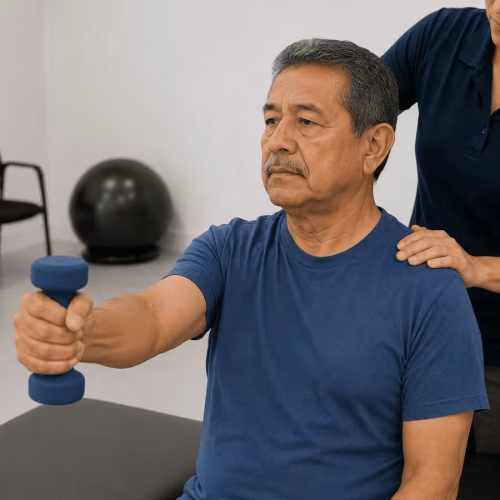
Hands-On Neurological Rehabilitation in Miami
Our Treatment Approach
Therapists use a combination of task-specific training, gait retraining, and neuromuscular re-education to help the brain and body relearn movement patterns disrupted by stroke.
This may include weight-bearing exercises to rebuild strength on the affected side, balance training to reduce fall risk, and repetitive functional movements – reaching, stepping, standing from a chair – that mirror real daily activities.
Manual techniques are also used to manage spasticity and maintain range of motion in joints that are prone to stiffening after a stroke.
Why Movement-Based Care Works
The brain retains a remarkable capacity to reorganize itself after injury, a process known as neuroplasticity. Structured, repetitive movement is one of the most effective ways to drive that reorganization, which is why physical therapy focuses on active, goal-directed exercise rather than passive rest.
A customized program built around each patient’s specific deficits and personal goals – whether that’s walking independently again, climbing stairs, or simply getting in and out of bed safely – helps rebuild both physical capacity and confidence.
Stroke-Related Conditions We Treat
- Hemiparesis and one-sided weakness
- Gait and balance dysfunction after stroke
- Spasticity management
- Post-stroke fatigue
- Fall prevention after stroke
- Upper extremity motor recovery
- Transfer and mobility training
Your Physical Therapy Appointment
What to Expect at Your First Visit
Sessions are one-on-one with a licensed physical therapist, not an aide or technician. Your therapist will explain what is happening in your nervous system in plain language, set realistic recovery goals, and give you a home program that keeps progress happening between visits. Whether your symptoms started yesterday or have been bothering you for years, a structured PT program can make a meaningful difference.
- 8390 W Flagler St Ste 203, Miami, FL 33144
- Monday-Thursday : 7AM - 7PM
FAQ
1. Do I Need a Referral to Start Physical Therapy?
Many patients can begin treatment without a physician referral, depending on their insurance plan and condition. We can help verify your eligibility before your first visit.
2.Will my insurance cover physical therapy?
We accept most major insurance plans and can help you understand your coverage, benefits, and any expected out-of-pocket costs before starting care.